Those Who Hate AI

As time goes by, a fundamentally harmless invention is taking hold, and its danger does not so much lie in what it actually does—after all, it is nothing more than a statistical language model—but rather in what people believe it does, or might one day do. In other words, there exists a kind of hype surrounding its supposed dangerousness. But that is not what I intend to discuss.
What I want to address instead is the fact that this kind of reaction to AI comes from a certain “web economy” which has amassed—and still commands—enormous amounts of money and revenue. Entire digital empires are built upon it, from YouTube, Twitch, and TikTok, all the way to OnlyFans and, more broadly, the world of online pornography. I am referring to that rather absurd profession known as the “content creator.”
First of all, the so‑called “content creator” is not an artist. If they were to be judged by the standards applied to artists, they would be found wanting. Inventing that label is just one more way of saying, “artists make good money, and everyone would like to be an artist, but not everyone has gone through the trouble of becoming one, so let us lower the bar so we can invite everyone to the banquet.”
Certainly, some of them are talented, but that does not automatically make them “artists.” If we insist on using the term, the real problem with the notion of the “content creator” lies in how elastic it is, stretching from relatively capable examples—usually people with solid academic backgrounds and demonstrable expertise who explain things to others—all the way down to improvised amateurs who pass off whatever they can half‑mumble as “content.”
After all, we can call anyone a “content creator,” myself included: in the final analysis, even a blog produces content. The only difference is that I do not pretend to make a living off it, that is all. Yet the fact that even some ragamuffin who photographs her own breasts qualifies as a “content creator” and can rake in large amounts of money ought to force us to ask: is this really a job? And beyond that: for how much longer are we going to let rivers of money pour into the hands of people who draw stupid comics about anthropomorphic animals sucking cock?
When an enormous amount of money flows into the hands of a gaggle of idiots who do not deserve it, because they have not achieved any position of real value, it is inevitable that someone will eventually come along and say, “let us go and take that money.” From an investor’s point of view, paying a trained engineer means paying for an advanced service, whereas paying out the same income in revenue shares to a woman, solely because she is a mammal and possesses a vagina, becomes a problem: it is money thrown away.
And if this so‑called “economy” consists of billions upon billions being squandered on “content” of no value whatsoever, then the very first question people will start asking is, “Splendid. And how do we go about taking that money for ourselves?”
It was inevitable that, staring at the enormous turnover of amateur pornography on OnlyFans, someone would ask: if we were to build a system capable of speaking the way these “content creators” speak, and of producing short, realistic pornographic clips, how many of those billions could we pocket for ourselves? Platforms like OnlyFans have grown into multi‑billion‑dollar businesses off user‑generated adult content, with creators collectively earning several billion while the platform keeps a substantial cut of all transactions.
The same logic applies to the more “artistic” content creators. Between Ko‑fi, Patreon, and their assorted cousins, rivers of money are flowing toward “creators” who cater to the sexual fantasies of tedious men by drawing images that scream their lack of training: many of them have taken a single drawing course, and that is apparently enough to sketch a furry getting screwed by a brontosaurus. Yet if we take the trouble to look at how much money circulates in these “commissions” across Patreon and the rest, we discover torrents of cash being hurled at works with no value whatsoever, neither artistic nor creative.
It was obvious that someone, somewhere, would eventually look at that river of money and ask: how do I get my hands on it?
The answer to the problem is simple: I build a system capable of doing the “content creator’s” job, and I replace these mediocrities. Such a system will not be perfect, and it will never produce any genuine art—but then again, neither do any of these mediocrities.
And this, precisely, is the vast ocean of people now fueling the holy war against AI. These so‑called “creatives” are nothing of the sort; they produce the same things an AI can already produce, and they make a living doing what an AI can do for you on a standard twenty‑dollar‑a‑month subscription. There is very little mystery as to why they are afraid: in a world of AI and synthetic girlfriends, OnlyFans is a dead platform walking, and the entire porn ecosystem is little more than a condemned city waiting for the evacuation order.
They feel as safe as a T. rex who fancied itself an apex predator right up until it noticed a strange light in the sky. That light, as it turned out, was an asteroid.
The same story repeats itself with “journalists,” “political analysts,” “commentators,” and that entire menagerie of people who have managed to make a living without ever developing any recognisable competence. They are paid to churn out opinions, hot takes, and prefab narratives—the very sort of formulaic, derivative material that a halfway competent AI can already generate in bulk, which is why so many media companies are quietly replacing or downsizing editorial roles in favour of automated systems. It is hardly surprising that the loudest prophets of doom are often perched on precisely those branches the algorithm is about to saw off.
The same goes for singers who cannot sing and lean on Auto‑Tune like a crutch, yet somehow feel threatened by an AI that sings. On what grounds, exactly, do you fear being replaced by a machine, if you have never actually done the thing you claim to do in the first place ? If your “art” already consists of processed, synthetic, pitch‑corrected noise smoothed to the point where no human trace remains, then you have already abdicated your role to the machine; all that remains is for the machine to cut you out of the revenue stream.
A special mention ought to be reserved for today’s “DJs,” who now parade around as artists, when once upon a time they were the people who put records on at parties. Once, the DJ was the guy in the corner changing vinyl; now, thanks to spectacle, social media, and a few LED walls, the same basic task has been rebranded as high art and elevated to the status of headlining act at festivals. The job has swollen from selecting tracks to performing for cameras and algorithms, but the underlying inflation of prestige is the same: we took a modest technical role and, without adding the corresponding substance, baptised it as genius.
Quite right—and that is without even mentioning the rampant use of prefab sound engineering: sample packs, backing tracks, presets, and effect chains that roll straight out of the machine fully formed. How can they claim that this is “their” music when, in reality, it is material already manufactured by electronic systems, to which they merely adjust the order of appearance of three buttons? This is Yamaha doing music, not you.
It is obvious that AI is about to swallow the entire business of low‑value content. People say “low value” lightly, but in truth we are talking about a system that moves billions upon billions of euros, from streaming platforms saturated with generic output to algorithm‑optimized noise designed only to keep eyes and ears from wandering. Intellectuals who obtained positions and chairs because they were pushed by a party machine or by academic mechanisms bordering on family patronage, women who have turned the mere fact of having holes in their bodies into an income stream, all those forms of “content” of negligible value that nonetheless generate immense revenues are nothing more than dead men walking.
The porn industry is a dead man walking; the corporate administrative sector, increasingly carved up by AI agents automating repetitive back‑office work, is a dead man walking; the entertainment and music industries, where AI‑generated tracks are already eating into traditional streaming income, are likewise dead men walking. The entire world of easy money handed out for “content” with no real value is a condemned banquet hall. Did you truly imagine you could stroll into a restaurant, sneer at the food, and make a living from that alone, simply because you picked up two culinary buzzwords watching MasterChef ?
Here we arrive at the ridiculous accusation that AI is “stealing content.” But whose content, exactly? Let us set pornography aside for a moment; at this point it is so technical and stereotyped that, if copyright rules were applied with any rigor, they would all be paying royalties to Adam and Eve. Where, precisely, is the originality supposed to be in that?
Dear “content creator,” you who do the sort of thing I have just show below. and yet complain that AI “steals content”—are you quite sure your own “content” is not stealing from anyone? Have you, by any chance, ever heard of Disney, of 20th Century Fox, and—though I almost hesitate to speak his name in your presence—of H. R. Giger ?
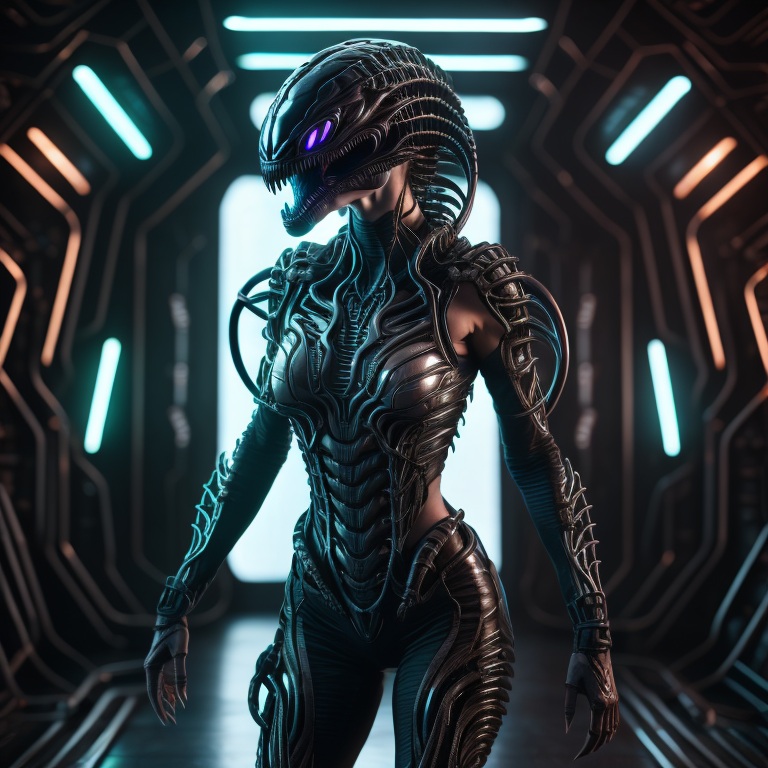
And you, the one who runs a Patreon to produce things like this—(cue the image of a sexy female Yautja)—are you quite certain you are being paid to “create” and not merely to “copy”?
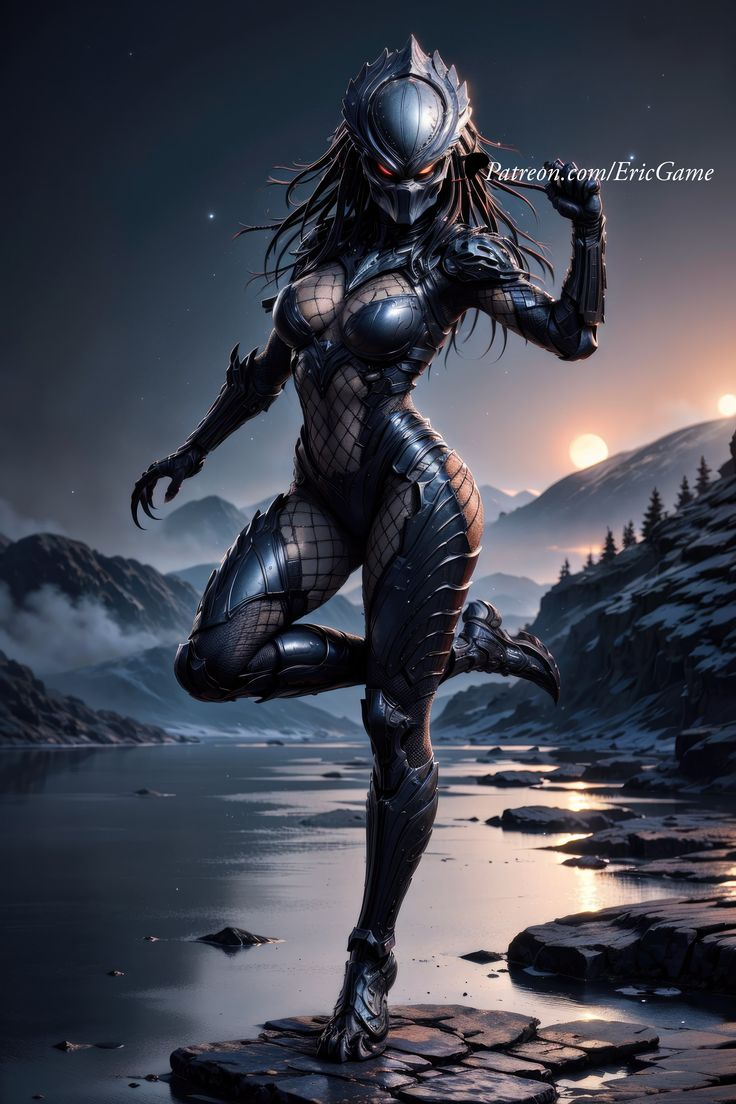
Posing the problem of AI “copying” the content it is trained on means, whether you like it or not, posing the problem of originality. And how much originality is there, exactly, in your works? In the legal world, cosplay, fan art, and most of what passes for “derivative content” already live in a grey zone, precisely because they lean so heavily on pre‑existing characters, universes, and designs owned by others.
We have now reached the point where cosplayers complain that AI is stealing their “content.” Cosplayers. People whose entire “original output” consists of recreating, with varying degrees of skill and accuracy, characters that belong to someone else’s intellectual property, right down to the hairstyle and the emblem on the chest—and yet they speak of theft, as though they themselves had not been camping out on someone else’s lawn from day one
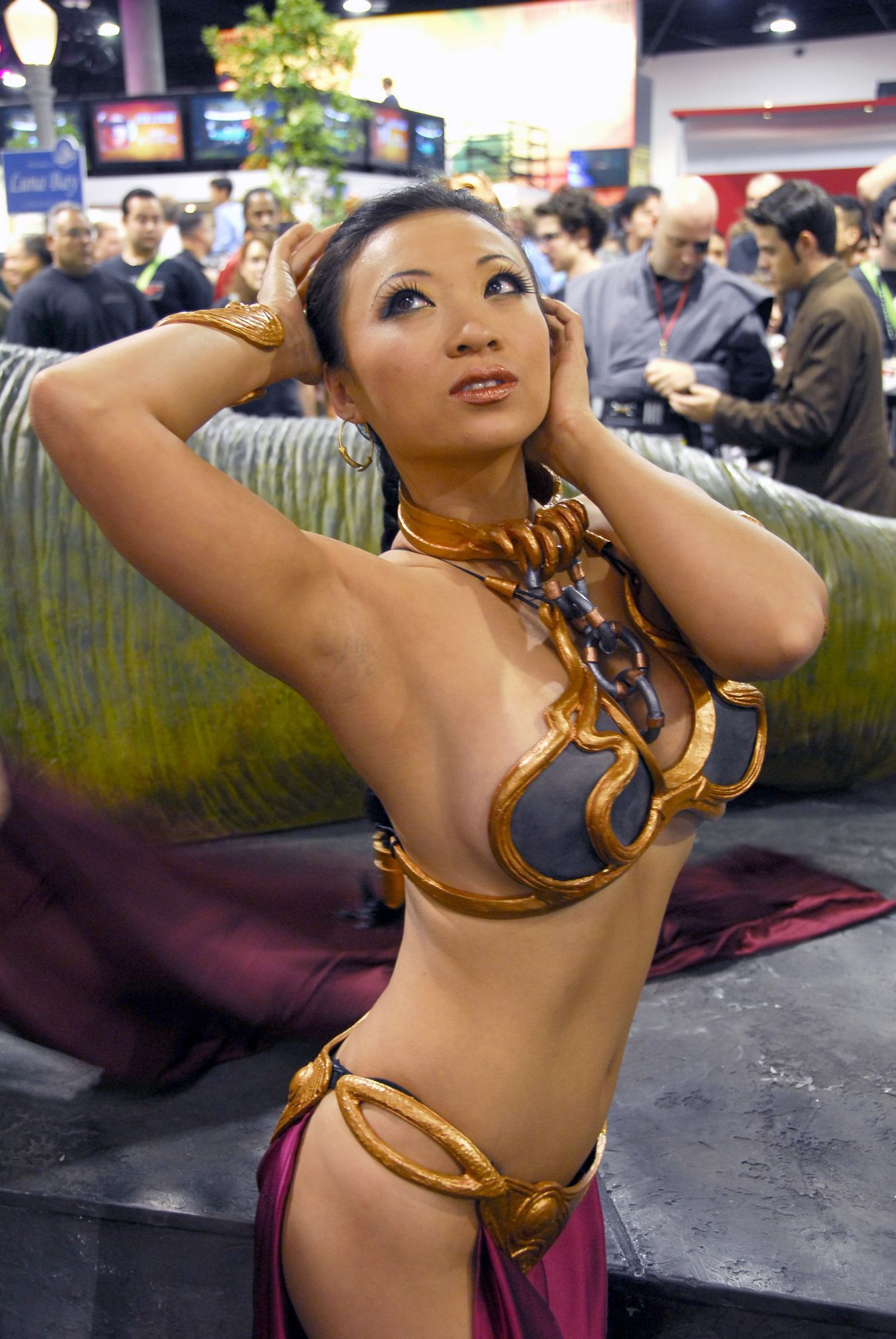
But are you absolutely certain, dear Princess Leia cosplayer, that you have not “copied” anything at all—nothing, nothing—from anyone? Original content, you say? You invented the very concept yourself?
This is the real root of the fear of AI. Hundreds of thousands of people are making a living off copied, déjà‑vu content, chewed‑over scraps taken from Hollywood and spat back out again; the entire cosplay scene, the whole universe of spin‑offs and other derivative works that swim in money via Patreon and its cousins—do they truly have the standing to complain that AI “copies” their content ?
And what am I supposed to say about Google’s YouTube business model, which hands out money to “creators” whose main output consists of “reacting” to other people’s work? Are you absolutely certain you are not “stealing” anything there? Absolutely certain you possess the moral right to drag AI into the dock and accuse it of theft, when your own profession exists entirely as an appendix to someone else’s originality ?
The problem is very simple. There is no such thing as a free lunch. You are earning undeserved amounts of money for works of zero value, and every time that happens, someone inevitably shows up who can produce the same things at a lower price. And they take your free lunch.
So let us say it openly: did you really believe you could conjure a multi‑billion‑euro sector out of nothing, without anyone eventually arriving who was capable of industrialising “content creation,” automating it, churning out works of no artistic value, and getting paid for them—just less than you ?
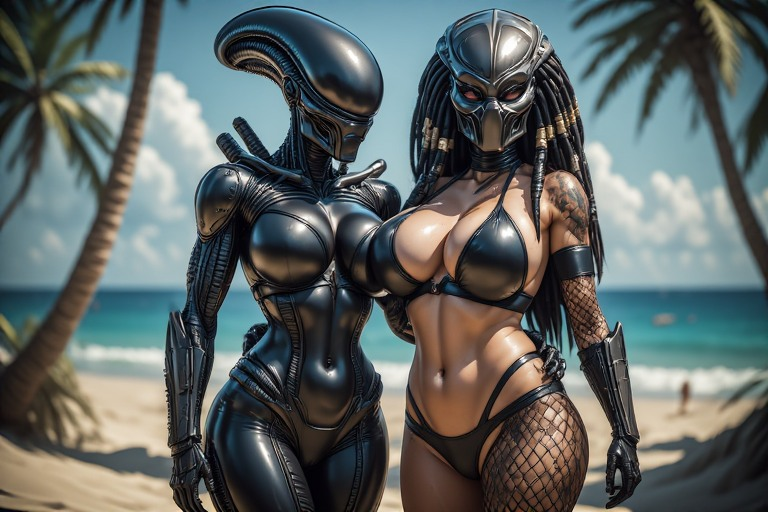
At this very moment, without troubling any so‑called ‘artist,’ I can open any image generator, type a single line such as: ‘a very busty female Xenomorph and a curvy female Yautja in bikinis on a sunny beach, highly detailed, photorealistic,’ and in under a minute I have the perfect illustration i see in your Patreon. There is no portfolio, no drawing course, no ‘paying your dues’: there is only a prompt. And it does exactly what you do, only faster and for far less than twenty dollars a month.
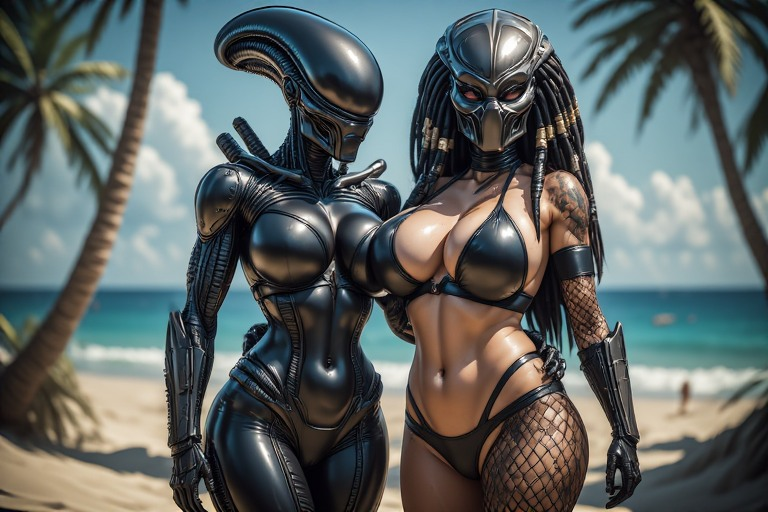
But, is the AI stealing, right. Not you.
Of course.
The issue is brutally simple. There is no free lunch. You have been earning unmerited amounts of money for work of zero value, and whenever that happens, someone shows up who can produce the same things more cheaply—and they take your free lunch.
So let us put it plainly: did you really imagine you could conjure a multi‑billion‑dollar sector out of nothing, and that no one would eventually arrive who could industrialise “content creation,” automate it, mass‑produce works of no artistic worth, and get paid for them—just less than you ?
Good evening. My name is Asteroid. James Asteroid.
Ops. I stole content.