This action will delete this post on this instance and on all federated instances, and it cannot be undone. Are you certain you want to delete this post?

Uriel Fanelli
uriel@keinpfusch.netIl contrario di "buonista" è "pezzo di merda".
uriel@keinpfusch.netIl contrario di "buonista" è "pezzo di merda".
| BLOG: | https://blog.keinpfusch.net |
|---|---|
| GIT | https://git.keinpfusch.net |
| AKTOR: | https://git.keinpfusch.net/loweel/Aktor-2 |
| XMPP: | uriel@keinpfusch.net |
| BBS | https://bbs.keinpfusch.net |
Uriel Fanelli posted May 26, 2026
Transhumanism: what remains today?
Transhumanism: what remains today?
Transhumanism. What Remains of It?
With the recent statements about immortality made by extremely rich old men, one cannot help wondering what remains of transhumanism, the philosophy that concerns — or used to concern — itself with imagining the consequences of modern technologies in relation to the enhancement of the human body.
There is a ghost haunting the modern world, and it is transhumanism. That it was permeated by a certain kind of fascism, and in particular frequented by quite a few fascist or para-fascist movements, I had already noticed years ago, when I prudently decided to keep my distance from it. It was not difficult to notice: all one had to do was look at who was talking about it, with what words, with what obsessions, with what idea of man and society.
Today, with various billionaires such as Elon Musk and Peter Thiel speaking about it explicitly — and believe me, the other billionaire oligarchs of technology will join in soon enough, as soon as they understand which way the wind is blowing — it is time to ask a few questions.
The first thing that clearly stands out is that transhumanism seems to have become the social and political ideology of the techno-oligarchs. And here all those who see red as soon as technology is mentioned are already charging like so many bulls in search of a sheet, provided it is red. And, let us be clear, they also have some reason to charge. The idea of a body enhanced to the point of never dying, or even the idea of backing up consciousness onto some cloud, is already fairly borderline in itself.
When, on top of that, there are people building immense data centres and other people putting chips into brains, it becomes fairly clear what they are thinking about, or at least what imaginary they are selling.
One does not need to be a conspiracy theorist to realise that the narrative package is always the same: overcoming the body, overcoming death, overcoming biological limits, overcoming the human. The problem is that, in the mouth of a billionaire, “overcoming the human” rarely means improving everyone’s life.
Much more often it means building a new hierarchy, in which those who can afford enhancement become something different, while those who cannot afford it remain simply discardable flesh, human material not updated to the latest release.
From imagining a humanity free from disease, death, ignorance and fear to reaching the concrete reality of actual fact, the path is long. And it consists mainly of one rather banal fact, often conveniently removed from the discussion: only these techno-billionaires can truly afford the technologies being discussed.
If tomorrow Musk wanted to become bionic, he could probably have some apparatus capable of NFC, RFID and who knows what else implanted into his body, and begin communicating directly with machines by using his own body as an interface.
The day a prosthesis becomes stronger, more precise or more efficient than a real arm, I have no doubt that the usual Musk could also choose to have a bionic arm transplanted, perhaps presenting it as the next step in evolution, or as an investor demo with enough neon lights.
But let us say it plainly: who else could afford it?
And I am not referring only to the costs, which would already be enough to close the discussion. I am also referring to the legal, medical and political problem. A doctor who amputated someone’s healthy arm, even in order to replace it with a superhuman prosthesis, would probably be struck off the medical register, and perhaps even end up in court. We are not talking about therapy, but about mutilating a healthy body in order to turn it into a hardware platform.
Could someone do it for Elon Musk? Much more probably, yes, simply because Musk has enough money, enough lawyers, enough lobbyists and enough relationships in positions of power to move the boundary between “forbidden” and “innovative” according to the needs of the moment. And this is the point that is always kept out of transhumanist propaganda: the limit is not only technological. It is not only a matter of research, science, engineering, or “when we get there”.
The limit is economic and legal. Or, to put it less elegantly but more precisely: the limit is power.
And this is why it appears fascist. What makes it appear fascist is not simply the fact that so many people from the world of the right, or the far right, feel attracted to it like moths to a neon lamp. That is a symptom, not the disease. The real problem is that, given the way society is built, this control over one’s own body is granted only to the most powerful.
And when control over the body, health, longevity, cognitive capacity, and the very possibility of “improving oneself” becomes a class privilege, then we are no longer in the field of human liberation. We are in the field of hierarchy.
And when a biological, economic and political hierarchy is presented as natural destiny, inevitable evolution or individual merit, we are already inside an imaginary that stinks of fascism even without any need for black shirts, Roman salutes and people shouting from a balcony.
If you think about it, almost all of the latest innovations are operating in the same way. We are talking about a world moving from “everything free” to “if you want at least decent performance, pay 23 dollars a month”, as happens with AI.
And if you then really want good performance, if you want quality, continuity, computing power, better models, privileged access, professional tools, then we are no longer talking about the twenty-dollar toy: depending on the performance required, or the quality required, you can even reach something like thirty thousand euros a year.
The mechanism is always the same. First, the technology is presented as universal emancipation. Then, once everyone has internalised that this technology is necessary, the price list arrives. At that point, the promise “it will be for everyone” becomes “it will be for everyone who can pay”. And the difference, as always, is not a technical detail. It is the entire political project.
We see beautiful women going around telling us that sixty is the new forty. Absolutely. And it is also very true, of course: today it is possible to reach sixty in physical, aesthetic and social conditions that were once much rarer. Except that, in those conditions, life costs you those extra hundred thousand dollars a year.
And this is where the narrative begins to creak.
Is that an enormous sum? It depends on where you are looking at the world from. For the upper-middle class and above, in the United States, probably not. Nor is it in many areas of Europe, at least for that social layer which can pay for preventive medicine, gyms, personal trainers, dermatologists, nutritionists, constant tests, travel, free time, quality food, regular sleep, decent housing and the possibility of not breaking its back in order to live.
But the ordinary woman, the one who does not earn a hundred thousand dollars a year, or who perhaps would not see those hundred thousand dollars even by adding together two salaries and a miracle, will never be a “new forty-year-old”. She will never be a “perennial”, as those who sell cosmetics, courses, supplements, cosmetic surgery and illusions packaged in English like to say.
Not because she lacks willpower. Not because she “lets herself go”. Not because she has failed to understand the secret of warm water with lemon in the morning. But because the body also ages according to the material conditions in which it lives. And if you work too much, sleep too little, eat what you can afford, postpone medical appointments, have no time to train and perhaps spend years taking care of others before even taking care of yourself, then sixty does not become the new forty.
It simply becomes sixty, with all the social, economic and biological weight that has been dumped onto it.
I bought a PC to run decent AI models on it. Now, it is true that I will deduct this cost as an expense reimbursement in my tax return, so it is not exactly the same thing as buying it to play Doom with RGB lights. But on the other hand, the sum I paid in Italy corresponds more or less to five monthly salaries.
Five.
And so the question becomes unavoidable: are we really sure that hatred of AI truly comes from the fact that it is supposedly intrinsically evil? Are we sure that the problem is only philosophical, ethical, spiritual, artistic, the usual chorus of beautiful souls defending humanity from the evil machine? Or, much more banally, does part of that hatred come from those social classes that cannot afford four thousand euros for a graphics card, a suitable computer, the electricity needed to run it, the time to learn how to use it, and perhaps also the technical competence to do something useful with it?
Because this is the point that is very rarely stated. AI today is described as a kind of alien invasion. It arrives, destroys work, replaces people, kills creativity, steals the soul, eats children and probably double-parks as well. But in practice, those who can afford to use it well use it. Those who can buy it integrate it. Those who can pay for the best tools pay for them. Those who can hire people capable of automating parts of the work do so.
And those who cannot afford it instead experience it as a threat descending from above.
Are we sure that, if it were available at reasonable prices, it would be hated and despised in the same way? Are we sure that, if every worker could truly have access to powerful, local, controllable tools, without having to depend on the monthly subscription to whichever cloud master happens to be in charge, the reaction would be the same? Or are we willing to think something much less noble, but much more concrete: that if it were also available to those classes of workers who fear it today, perhaps it would simply become part of their work?
Because this has already happened countless times. A technology appears. At first it is stuff for the rich, for companies, for the military, for universities, for people who live on the top floor of the building. Then it descends, becomes accessible, becomes normal, and at that point nobody calls it apocalypse anymore. They call it a tool. The problem, therefore, is not only AI.
The problem is who owns it, who pays for it, who controls it, who can afford to use it to increase their own power, and who instead has to wait for it to land on them in the form of a layoff, a corporate algorithm, or a twenty-three-dollar-a-month subscription.
My suspicion is simple: I suspect that this world of emerging technologies does not appear fascist to most people because they are “inherently” fascist. I do not believe that inside a neural network, inside a prosthesis, inside a chip, inside a language model or inside a data centre there exists, through some mysterious metaphysical property, the seed of fascism.
I am convinced, rather, that it would not appear that way if it were made available without building a hierarchy. That is, without being distributed according to a scale of access that increasingly resembles a caste system disguised as a commercial price list:
- free, if you accept reading bullshit;
- 23 dollars a month, if you want it to be acceptable;
- 200 dollars a month, if you want to start working with it;
- 20,000 dollars a year, if you really want to work with it.
Or, alternatively, you can spend five of your salaries to buy a computer that can run it at home. Provided, of course, that you already know that in a year your models will be too poor, your graphics card will be old, your RAM will no longer be enough, and someone will explain to you in a paternal tone that this is how progress works, that you cannot expect to keep up if you do not invest continuously, and that ultimately it is your fault if you are not competitive enough.
And this is where technology begins to take on that face. Not because it is fascist in itself, but because it is introduced into a society that is already hierarchical, already unequal, already built to turn every innovation into a new class barrier. The promise is universal: intelligence for all, health for all, enhancement for all, longevity for all, access for all.
The practice, instead, is always the same: a free taste to train the public, a minimum subscription so as not to fall completely behind, a professional plan to actually work, and then the divine plan, the one for those who can pay sums that for many people are simply annual budgets for survival.
At that point we are no longer talking about progress. We are talking about automated social selection. Those who can pay enter the future. Those who cannot pay remain in the present, or better still in the past, but with the moral guilt of not having updated themselves. And when the future is sold in pricing tiers, there is no need for technology to be fascist in order to produce a fascist effect. It is enough for it to be distributed as privilege.
The problem, then, is not the philosophical content of transhumanism, or at least not only that. It is not the old conference question, the one with the professor in the velvet jacket wondering whether it is right to overcome the limits of the human, whether it is moral to live longer, whether it is legitimate to enhance the body, whether consciousness can be copied, whether a prosthesis improves or distorts personal identity.
The real problem is access.
Because a philosophy that promises liberation, but becomes available only to those who have enough money and power, immediately stops being liberation.
Uriel Fanelli posted May 26, 2026
Transumanesimo. Cosa ne rimane?
Con le recenti uscite sull'immortalita', da parte di ricchissimi vecchi, viene da chiedersi cosa sia rimasto del transumanesimo, la filosofia che si occupa(va) di immaginare le conseguenze di tecnologie moderne in relazione al potenziamento del corpo umano.
C’è un fantasma che si aggira per il mondo moderno, ed è il transumanesimo. Che fosse permeato da un certo fascismo, e in particolare frequentato da parecchi movimenti fascisti o parafascisti, lo avevo già notato anni fa, quando decisi prudentemente di tenermene alla larga. Non era difficile accorgersene: bastava osservare chi ne parlava, con quali parole, con quali ossessioni, con quale idea dell’uomo e della società. Oggi, con vari miliardari come Elon Musk e Peter Thiel che ne parlano esplicitamente — e credetemi, gli altri miliardari oligarchi della tecnologia si uniranno presto, appena capiranno che aria tira — è tempo di farsi qualche domanda.
La prima cosa che spicca è, chiaramente, che il transumanesimo sembra essere diventato l’ideologia sociale e politica dei tecno-oligarchi. E qui tutti quelli che vedono rosso appena si parla di tecnologia stanno già caricando come tanti tori alla ricerca di un lenzuolo, purché rosso. E, intendiamoci, hanno anche qualche ragione per caricare. L’idea di un corpo potenziato al punto da non morire mai, o addirittura l’idea di un backup della coscienza su qualche cloud, è già abbastanza borderline di suo. Quando poi ci sono persone che costruiscono datacenter immensi e altre persone che mettono chip nel cervello, è abbastanza chiaro a cosa stiano pensando, o almeno quale immaginario stiano vendendo.
Non è necessario essere complottisti per accorgersi che il pacchetto narrativo è sempre quello: superare il corpo, superare la morte, superare i limiti biologici, superare l’umano. Il problema è che, nella bocca di un miliardario, “superare l’umano” raramente significa migliorare la vita di tutti. Molto più spesso significa costruire una nuova gerarchia, nella quale chi può permettersi il potenziamento diventa qualcosa di diverso, e chi non può permetterselo rimane semplicemente carne di scarto, materiale umano non aggiornato all’ultima release.
Da immaginare un’umanità libera da malattie, morte, ignoranza e paura, sino ad arrivare alla realtà concreta del fatto reale, il tratto è lungo. Ed è costituito principalmente da un fatto, abbastanza banale ma spesso rimosso: solo questi tecno-miliardari possono permettersi davvero le tecnologie di cui si parla.
Se domani Musk volesse diventare bionico, potrebbe probabilmente farsi impiantare un qualsiasi apparato capace di NFC, RFID e quant’altro, e cominciare a comunicare direttamente con le macchine usando il proprio corpo come interfaccia. Il giorno in cui una protesi sarà più forte, più precisa o più efficiente di un braccio vero, non ho dubbi che il solito Musk potrebbe anche scegliere di farsi trapiantare un braccio bionico, magari presentandolo come il prossimo passo dell’evoluzione, o come una demo per investitori con abbastanza luci al neon.
Ma diciamolo pure: chi altri se lo potrebbe permettere?
E non mi riferisco soltanto ai costi, che già basterebbero a chiudere la discussione. Mi riferisco anche al problema legale, medico, politico. Un medico che amputasse un braccio sano a qualcuno, anche per sostituirlo con una protesi sovrumana, verrebbe probabilmente espulso dall’ordine, e forse finirebbe anche in tribunale. Non stiamo parlando di una terapia, ma di mutilare un corpo sano per trasformarlo in una piattaforma hardware.
Potrebbe farlo per Elon Musk? Molto più probabilmente sì, semplicemente perché Musk ha abbastanza denaro, abbastanza avvocati, abbastanza lobbisti e abbastanza relazioni nelle posizioni di potere da poter spostare il confine tra “vietato” e “innovativo” a seconda della necessità del momento. E questo è il punto che viene sempre tenuto fuori dalla propaganda transumanista: il limite non è soltanto tecnologico. Non è soltanto una questione di ricerca, di scienza, di ingegneria o di “quando ci arriveremo”.
Il limite è economico e legale. Ovvero, detto in maniera meno elegante ma più precisa: il limite è il potere.
Ed ecco per quale motivo appare fascista. A farla apparire fascista non è semplicemente il fatto che tanti esponenti del mondo della destra, o dell’estrema destra, se ne sentano attratti come falene davanti a una lampada al neon. Quello è un sintomo, non la malattia. Il problema vero è che, per come è costruita la società, questo controllo sul proprio corpo è concesso soltanto ai più potenti.
E quando il controllo sul corpo, sulla salute, sulla longevità, sulla capacità cognitiva, sulla possibilità stessa di “migliorarsi” diventa un privilegio di classe, allora non siamo più nel campo della liberazione umana. Siamo nel campo della gerarchia. E quando una gerarchia biologica, economica e politica viene presentata come destino naturale, evoluzione inevitabile o merito individuale, siamo già dentro un immaginario che puzza di fascismo anche senza bisogno di camicie nere, saluti romani e gente che urla da un balcone.
Se ci pensate, quasi tutte le ultime novità stanno operando allo stesso modo. Stiamo parlando di un mondo che passa da “tutto gratis” a “se vuoi prestazioni almeno decenti paga 23 dollari al mese”, come succede con la AI. E se poi vuoi davvero le prestazioni buone, se vuoi qualità, continuità, potenza di calcolo, modelli migliori, accesso privilegiato, strumenti professionali, allora non stiamo più parlando del giocattolino da venti dollari: a seconda delle prestazioni richieste, o della qualità richiesta, si arriva anche a una trentina di migliaia di euro l’anno.
Il meccanismo è sempre lo stesso. Prima si presenta la tecnologia come emancipazione universale. Poi, quando tutti hanno interiorizzato che quella tecnologia è necessaria, arriva il listino prezzi. A quel punto la promessa “sarà per tutti” diventa “sarà per tutti quelli che possono pagare”. E la differenza, come sempre, non è un dettaglio tecnico. È l’intero progetto politico.
Vediamo in giro donne bellissime che vengono a raccontarci che i sessant’anni sono i nuovi quaranta. Assolutamente. Ed è anche verissimo, per carità: oggi è possibile arrivare a sessant’anni in condizioni fisiche, estetiche e sociali che una volta erano molto più rare. Solo che, in quelle condizioni, la vita vi costa quei centomila dollari l’anno in più.
Ed è qui che la narrazione comincia a scricchiolare.
È una cifra enorme? Dipende da dove state guardando il mondo. Per un ceto medio-alto in su, negli Stati Uniti, probabilmente no. E non lo è nemmeno in molte aree d’Europa, almeno per quella fascia sociale che può pagare medicina preventiva, palestra, personal trainer, dermatologi, nutrizionisti, esami continui, viaggi, tempo libero, alimentazione di qualità, sonno regolare, case decenti e la possibilità di non spaccarsi la schiena per vivere.
Ma la donna normale, quella che non guadagna centomila dollari l’anno, o che magari quei centomila dollari non li vede nemmeno sommando due stipendi e un miracolo, non sarà mai una “nuova quarantenne”. Non sarà mai una “perennial”, come piace dire a chi vende cosmetici, corsi, integratori, chirurgia estetica e illusioni confezionate in inglese.
Non perché le manchi la volontà. Non perché “si lasci andare”. Non perché non abbia capito il segreto dell’acqua tiepida con limone al mattino. Ma perché il corpo invecchia anche in base alle condizioni materiali in cui vive. E se lavori troppo, dormi poco, mangi quello che puoi permetterti, rimandi le visite mediche, non hai tempo per allenarti e magari passi anni a occuparti degli altri prima ancora che di te stessa, allora i sessant’anni non diventano i nuovi quaranta. Diventano semplicemente sessant’anni, con tutto il peso sociale, economico e biologico che ci è stato scaricato sopra.
Ho comprato un PC per farci girare sopra dei modelli decenti di AI. Ora, è vero che scaricherò questo costo come rimborso spese nella dichiarazione dei redditi, e quindi non è esattamente la stessa cosa che comprarlo per giocare a Doom con le lucine RGB. Ma d’altro canto, la cifra che ho pagato in Italia corrisponde più o meno a cinque stipendi mensili.
Cinque.
E allora la domanda diventa inevitabile: siamo proprio sicuri che l’odio verso la AI derivi davvero dal fatto che sarebbe intrinsecamente malvagia? Siamo sicuri che il problema sia soltanto filosofico, etico, spirituale, artistico, il solito coro delle anime belle che difendono l’umanità dalla macchina cattiva? Oppure, molto più banalmente, una parte di quell’odio viene da quelle classi sociali che non possono permettersi quattromila euro per una scheda grafica, un computer adeguato, la corrente elettrica per farlo girare, il tempo per imparare a usarlo e magari anche la competenza tecnica per farci qualcosa di utile?
Perché questo è il punto che viene detto molto poco. La AI, oggi, è raccontata come una specie di invasione aliena. Arriva, distrugge il lavoro, sostituisce le persone, uccide la creatività, ruba l’anima, mangia i bambini e probabilmente parcheggia pure in doppia fila. Ma, nella pratica, chi può permettersi di usarla bene la usa. Chi può comprarla, la integra. Chi può pagare gli strumenti migliori, li paga. Chi può assumere persone capaci di automatizzare pezzi di lavoro, lo fa. E chi invece non può permettersela la subisce come una minaccia calata dall’alto.
Siamo sicuri che, se fosse disponibile a prezzi ragionevoli, sarebbe odiata e disprezzata allo stesso modo? Siamo sicuri che, se ogni lavoratore potesse avere davvero accesso a strumenti potenti, locali, controllabili, senza dover dipendere dall’abbonamento mensile al padrone del cloud di turno, la reazione sarebbe la stessa? O siamo disposti a pensare una cosa molto meno nobile, ma molto più concreta: che se fosse disponibile anche a quelle classi di lavoratori che oggi la temono, forse diventerebbe semplicemente una parte del loro lavoro?
Perché è già successo, infinite volte. Una tecnologia appare. All’inizio è roba da ricchi, da aziende, da militari, da università, da gente che sta nel piano alto del palazzo. Poi scende, diventa accessibile, diventa normale, e a quel punto nessuno la chiama più apocalisse. La chiama strumento. Il problema, quindi, non è soltanto la AI. Il problema è chi la possiede, chi la paga, chi la controlla, chi può permettersi di usarla per aumentare il proprio potere, e chi invece deve aspettare che gli arrivi addosso sotto forma di licenziamento, algoritmo aziendale o abbonamento da ventitré dollari al mese.
Il mio sospetto è semplice: sospetto cioè che questo mondo di tecnologie emergenti non risulti fascista ai più perché esse siano “inerentemente” fasciste. Non credo che dentro una rete neurale, dentro una protesi, dentro un chip, dentro un modello linguistico o dentro un datacenter ci sia, per qualche misteriosa proprietà metafisica, il germe del fascismo.
Sono convinto, invece, che non risulterebbe tale se fosse disponibile senza costruire una gerarchia. Ovvero, senza essere distribuito secondo una scala di accesso che assomiglia sempre più a un sistema di caste travestito da listino commerciale:
- gratis, se accetti di leggere cazzate;
- 23 dollari al mese, se la vuoi accettabile;
- 200 dollari al mese, se vuoi iniziare a lavorarci;
- 20.000 dollari l’anno, se vuoi davvero lavorarci.
Oppure, in alternativa, puoi spendere cinque dei tuoi stipendi per comprare un computer che la faccia girare a casa. A patto, naturalmente, di sapere già che tra un anno i tuoi modelli saranno troppo scadenti, la tua scheda grafica sarà vecchia, la tua RAM non basterà più, e qualcuno ti spiegherà con tono paterno che il progresso funziona così, che non puoi pretendere di stare al passo se non investi continuamente, e che in fondo la colpa è tua se non sei abbastanza competitivo.
Ed è qui che la tecnologia comincia ad assumere quella faccia lì. Non perché sia fascista in sé, ma perché viene introdotta in una società già gerarchica, già diseguale, già costruita per trasformare ogni innovazione in una nuova barriera di classe. La promessa è universale: intelligenza per tutti, salute per tutti, potenziamento per tutti, longevità per tutti, accesso per tutti. La pratica, invece, è sempre la stessa: un assaggio gratuito per addestrare il pubblico, un abbonamento minimo per non restare completamente indietro, un piano professionale per lavorare davvero, e poi il piano divino, quello per chi può pagare cifre che per molte persone sono semplicemente annualità di sopravvivenza.
A quel punto non stiamo più parlando di progresso. Stiamo parlando di selezione sociale automatizzata. Chi può pagare entra nel futuro. Chi non può pagare rimane nel presente, o meglio ancora nel passato, però con la colpa morale di non essersi aggiornato. E quando il futuro viene venduto a scaglioni di prezzo, non c’è bisogno che la tecnologia sia fascista per produrre un effetto fascista. Basta che sia distribuita come privilegio.
Il problema, cioè, non è il contenuto filosofico del transumanesimo, o almeno non soltanto. Non è la vecchia domanda da convegno, quella con il professore in giacca di velluto che si chiede se sia giusto superare i limiti dell’umano, se sia morale vivere più a lungo, se sia lecito potenziare il corpo, se la coscienza possa essere copiata, se una protesi migliori o snaturi l’identità personale.
Il problema vero è l’accesso.
Perché una filosofia che promette liberazione, ma diventa disponibile solo a chi ha abbastanza soldi e potere, smette immediatamente di essere liberazione.


Donald Duck
#comicstrip #donalduck #comicstrips #disney
Devo provare se la funzione di report funziona bene su Aktor. Sto provocando un pochino di idioti.
I need to test whether the reporting function works properly on Aktor. I’m triggering a few idiots a little.
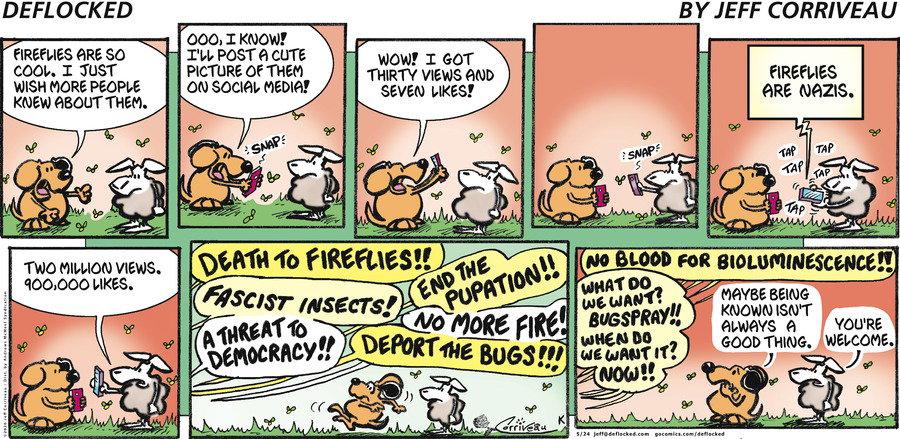
New comic strip found: DeFlocked - 2026-05-24 https://www.gocomics.com/deflocked/2026/05/24
AKTOR beta-0.910 is here. Now with IPFS CDN.
# Release notes for beta-0.910
## Features
- Added optional IPFS-backed media distribution. Local storage remains
authoritative, while public local media can also be added to a configured Kubo
node and exposed with the Aktor-specific `AKT_IPFS_CID` URL hint.
- Added remote IPFS media import for federated Aktor instances. When an incoming
attachment URL contains `AKT_IPFS_CID`, Aktor can fetch the bytes through its
configured Kubo API, validate them through the normal media pipeline, store
them locally, and then serve the attachment from the local fileserver.
- Introduced a modular remote media hint layer so IPFS is only the first backend
implementation. The same structure can later support other content-addressed
or remote distribution systems such as torrent-style hashes or Syncthing-like
backends.
- Added generic remote media hint metadata to attachment storage while retaining
compatibility with the IPFS-specific fields used by this release.
- Added explicit IPFS runtime observability. When IPFS mode is configured,
startup logs now report Kubo RPC probe success or failure, and each local
media processing job logs whether it was added to IPFS and which CID was
produced.
- Added plain-text editor surfaces for post composition and administrative text
fields, including terms and conditions, instance description, and profile bio
editing. These editors preserve plain text, newlines, and blank lines without
converting user text into HTML.
- Added EAL5+-style function and test preambles across several Go source
batches, documenting function purpose, preconditions, postconditions,
invariants, and test assertions to make the inherited GoToSocial code easier
to audit and maintain.
## Fixes
- Fixed local follow lookup for newly approved local accounts by accepting local
account handles in the follow lookup path. This keeps local follows from
failing with a spurious `404` when the target account exists locally.
- Tightened signup approval so approval notifications and admin approval flow
are gated on email confirmation. Unconfirmed accounts remain pending and can be
cleaned up by the inactive-account cleanup task instead of becoming approved
users too early.
- Improved public profile rendering so long post bodies are constrained by their
frame instead of overflowing the containing layout.
- Improved public-page color contrast, including cases where red text on blue,
white text on white, or similarly low-contrast combinations made public pages
and blocked-server pages hard to read.
- Unified Settings people-list rendering to avoid inconsistent account/admin
list behavior between panels.
- Rejected malicious remote media hints whose CID bytes do not validate as
supported media. A URL that looks like an image but resolves to non-media or
executable-like bytes now fails the normal media processing path instead of
becoming a usable local attachment.
## Documentation
- Documented the IPFS/Kubo deployment model in `IPFS.md`, including a ready to
use Docker Compose example, required Aktor environment variables, Kubo ports,
and which ports must remain private.
- Documented the IPFS federation behavior: `AKT_IPFS_CID` is a fetch hint only;
after a successful remote fetch, the receiving Aktor instance stores and
serves the media locally.
- Documented the IPFS privacy/performance tradeoff. IPFS can behave like a
distributed CDN for public media while reducing repeated origin-server
downloads, but it is not anonymity; IPFS logs may reveal interest in a CID at
the node/network level without reliably identifying the final user or the
original publisher.
- Updated `INSTALL.md` and `IPFS.md` with the optional IPFS media mode, remote
media hint configuration, local-storage authority model, and greppable `IPFS:`
operational log markers.
## Tests and quality
- Added IPFS media contract smoke coverage for the happy path and failure path.
- Added regression coverage for non-media bytes fetched through a remote media
hint.
- Added an end-to-end IPFS runtime smoke test that starts a real Kubo container,
uploads media through Aktor, creates a public post, verifies that the
serialized media URL contains `AKT_IPFS_CID`, and verifies that the server logs
contain the `IPFS:` startup/add markers.
- Re-ran the full smoke suite during the IPFS implementation work and verified
## What's next to v1?
- torrent storage. Stop giving your data to S3 , f**k the new "european storage" someone is committed to. We want a distributed fediverse, we need a distributed storage/CDN
- syncthing backend storage: same as torrent and IPFS.
- maybe sftp. You buy a small instance in some hosting center, or even some cheap website space accessible with sftp, then you load there your pic, and there is your CDN.
- I2P transport: the possibility to use I2P darknet for communication among instances.
Uriel Fanelli posted May 25, 2026





Every day is September.


“This is a virtual museum of operating systems (and standalone applications) running under emulation, implemented as a Linux VM for QEMU, VirtualBox, or UTM.”