Il contrario di buonista e' pezzo di merda.
This action will delete this post on this instance and on all federated instances, and it cannot be undone. Are you certain you want to delete this post?
This action will delete this post on this instance and on all federated instances, and it cannot be undone. Are you certain you want to delete this post?
This action will block this actor and hide all of their past and future posts. Are you certain you want to block this actor?
This action will block this object. Are you certain you want to block this object?
Are you sure you want to delete the OAuth client [Client Name]? This action cannot be undone and will revoke all access tokens for this client.
Are you sure you want to revoke the OAuth token [Token ID]? This action cannot be undone and will immediately revoke access for this token.
Il contrario di buonista e' pezzo di merda.

Devo provare se la funzione di report funziona bene su Aktor. Sto provocando un pochino di idioti.
I need to test whether the reporting function works properly on Aktor. I’m triggering a few idiots a little.

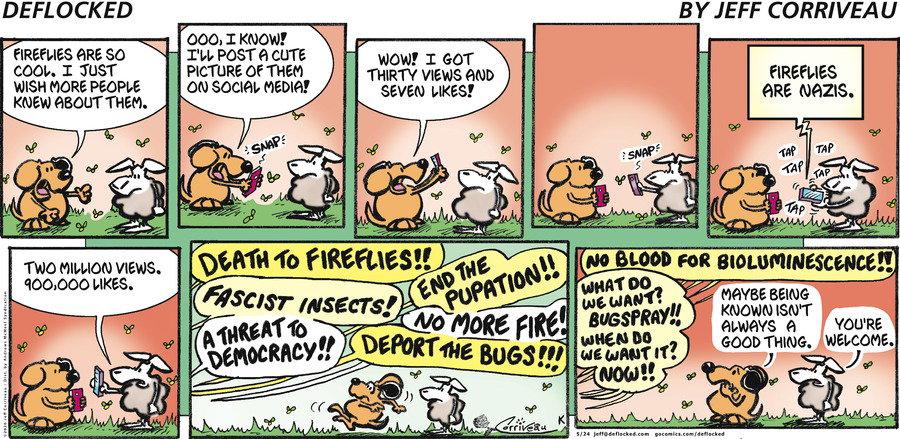
New comic strip found: DeFlocked - 2026-05-24 https://www.gocomics.com/deflocked/2026/05/24
# Release notes for beta-0.910
## Features
- Added optional IPFS-backed media distribution. Local storage remains
authoritative, while public local media can also be added to a configured Kubo
node and exposed with the Aktor-specific `AKT_IPFS_CID` URL hint.
- Added remote IPFS media import for federated Aktor instances. When an incoming
attachment URL contains `AKT_IPFS_CID`, Aktor can fetch the bytes through its
configured Kubo API, validate them through the normal media pipeline, store
them locally, and then serve the attachment from the local fileserver.
- Introduced a modular remote media hint layer so IPFS is only the first backend
implementation. The same structure can later support other content-addressed
or remote distribution systems such as torrent-style hashes or Syncthing-like
backends.
- Added generic remote media hint metadata to attachment storage while retaining
compatibility with the IPFS-specific fields used by this release.
- Added explicit IPFS runtime observability. When IPFS mode is configured,
startup logs now report Kubo RPC probe success or failure, and each local
media processing job logs whether it was added to IPFS and which CID was
produced.
- Added plain-text editor surfaces for post composition and administrative text
fields, including terms and conditions, instance description, and profile bio
editing. These editors preserve plain text, newlines, and blank lines without
converting user text into HTML.
- Added EAL5+-style function and test preambles across several Go source
batches, documenting function purpose, preconditions, postconditions,
invariants, and test assertions to make the inherited GoToSocial code easier
to audit and maintain.
## Fixes
- Fixed local follow lookup for newly approved local accounts by accepting local
account handles in the follow lookup path. This keeps local follows from
failing with a spurious `404` when the target account exists locally.
- Tightened signup approval so approval notifications and admin approval flow
are gated on email confirmation. Unconfirmed accounts remain pending and can be
cleaned up by the inactive-account cleanup task instead of becoming approved
users too early.
- Improved public profile rendering so long post bodies are constrained by their
frame instead of overflowing the containing layout.
- Improved public-page color contrast, including cases where red text on blue,
white text on white, or similarly low-contrast combinations made public pages
and blocked-server pages hard to read.
- Unified Settings people-list rendering to avoid inconsistent account/admin
list behavior between panels.
- Rejected malicious remote media hints whose CID bytes do not validate as
supported media. A URL that looks like an image but resolves to non-media or
executable-like bytes now fails the normal media processing path instead of
becoming a usable local attachment.
## Documentation
- Documented the IPFS/Kubo deployment model in `IPFS.md`, including a ready to
use Docker Compose example, required Aktor environment variables, Kubo ports,
and which ports must remain private.
- Documented the IPFS federation behavior: `AKT_IPFS_CID` is a fetch hint only;
after a successful remote fetch, the receiving Aktor instance stores and
serves the media locally.
- Documented the IPFS privacy/performance tradeoff. IPFS can behave like a
distributed CDN for public media while reducing repeated origin-server
downloads, but it is not anonymity; IPFS logs may reveal interest in a CID at
the node/network level without reliably identifying the final user or the
original publisher.
- Updated `INSTALL.md` and `IPFS.md` with the optional IPFS media mode, remote
media hint configuration, local-storage authority model, and greppable `IPFS:`
operational log markers.
## Tests and quality
- Added IPFS media contract smoke coverage for the happy path and failure path.
- Added regression coverage for non-media bytes fetched through a remote media
hint.
- Added an end-to-end IPFS runtime smoke test that starts a real Kubo container,
uploads media through Aktor, creates a public post, verifies that the
serialized media URL contains `AKT_IPFS_CID`, and verifies that the server logs
contain the `IPFS:` startup/add markers.
- Re-ran the full smoke suite during the IPFS implementation work and verified
## What's next to v1?
- torrent storage. Stop giving your data to S3 , f**k the new "european storage" someone is committed to. We want a distributed fediverse, we need a distributed storage/CDN
- syncthing backend storage: same as torrent and IPFS.
- maybe sftp. You buy a small instance in some hosting center, or even some cheap website space accessible with sftp, then you load there your pic, and there is your CDN.
- I2P transport: the possibility to use I2P darknet for communication among instances.



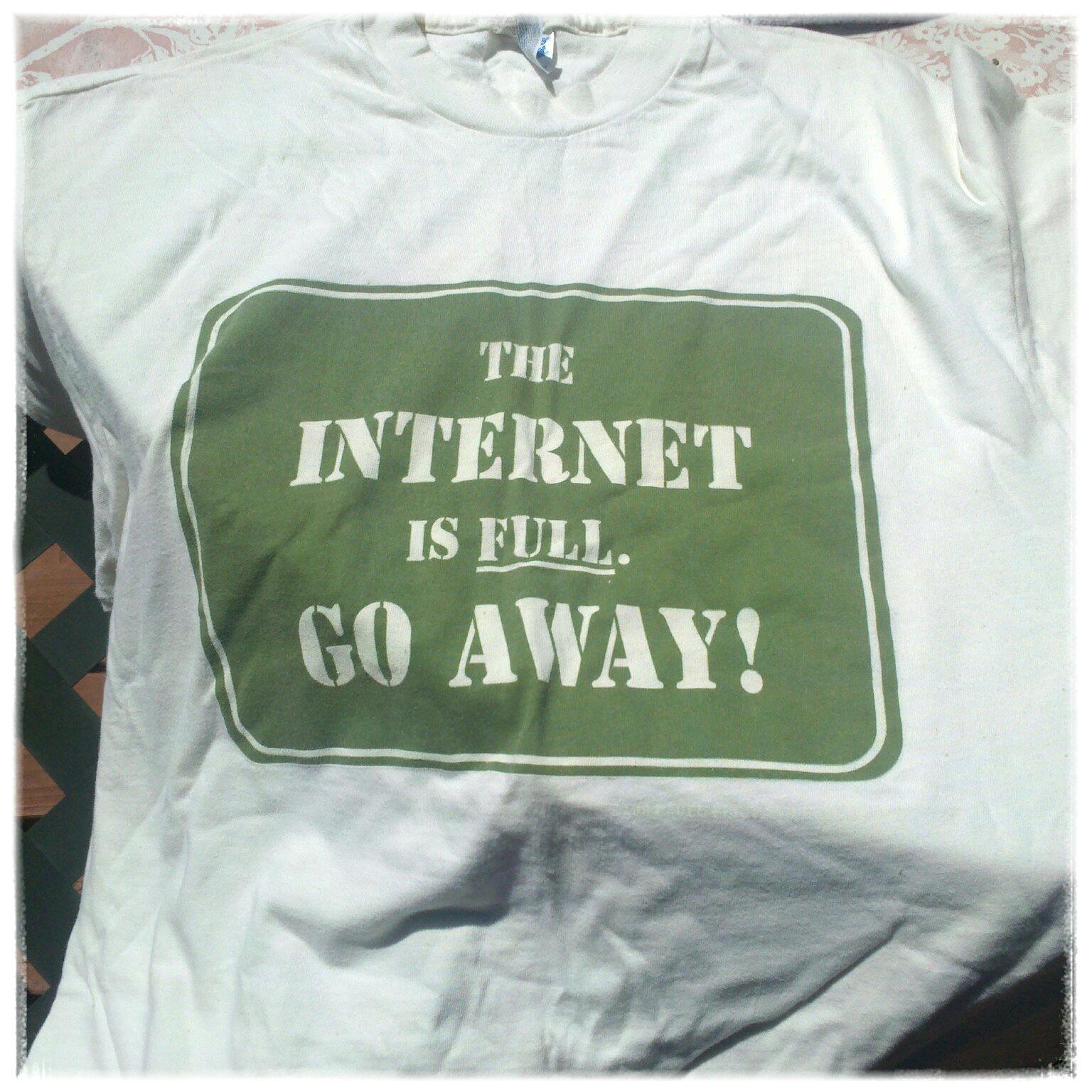
Every day is September.


-Data centers are now consuming 2% of all of the world's electricity
-The US is by far the world’s largest data center location, with 43% of global consumption
-US data centers are now devouring 6% of all of the US electric power

“This is a virtual museum of operating systems (and standalone applications) running under emulation, implemented as a Linux VM for QEMU, VirtualBox, or UTM.”
Peccato. Era un bel posto.


Tired of being a Basic Bitch?
Upgrade to Bitch+ for just $5.99/month