One foot. Two shoes.
Yesterday was a strange day, because I stumbled across an odd discussion on the Fediverse. It started with a Dutch person criticizing the history of the Netherlands, claiming that Dutch kitchens are small because the Dutch used to be barbarians who cooked on the floor.
Now, I should admit my bias: I like the Netherlands. It’s close to Düsseldorf, and since I moved here I occasionally go there for a visit—if nothing else, for the cheese. In other words, for the food. Very Italian of me, I know. And no, not for the reasons you might be thinking.
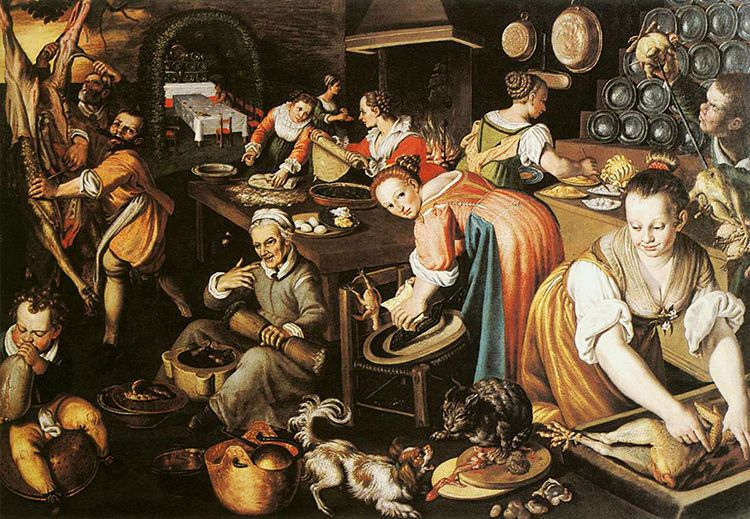
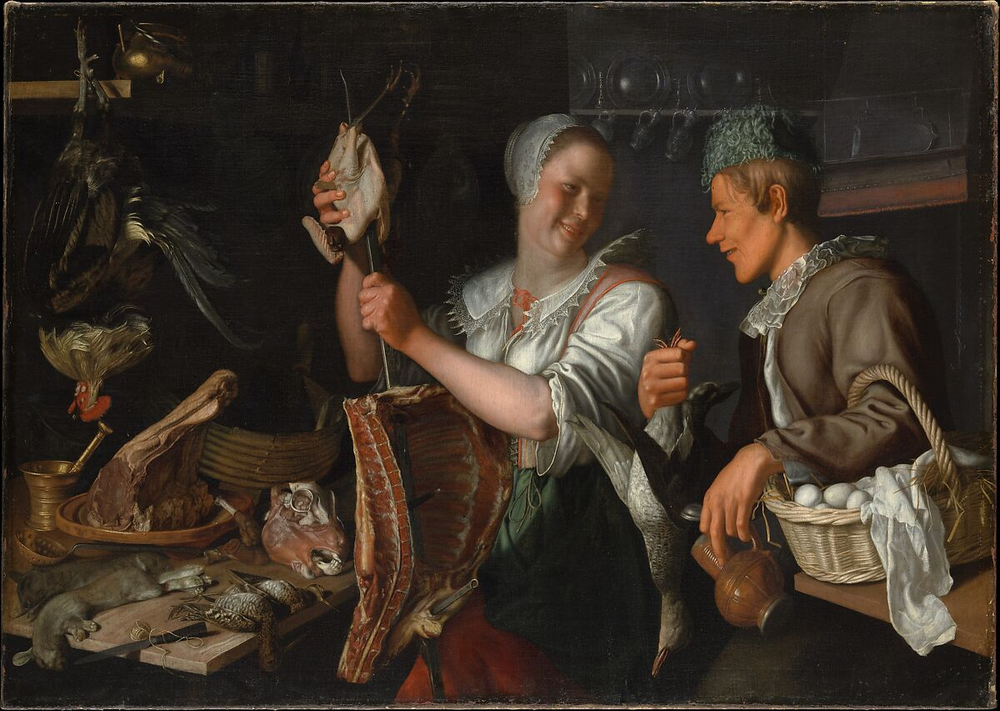
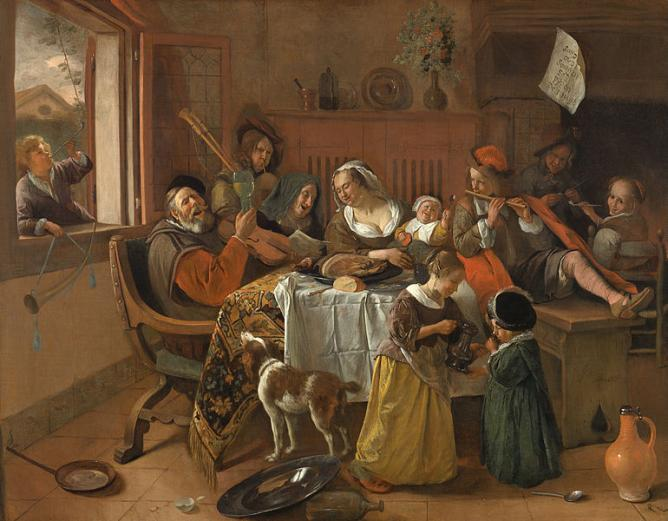
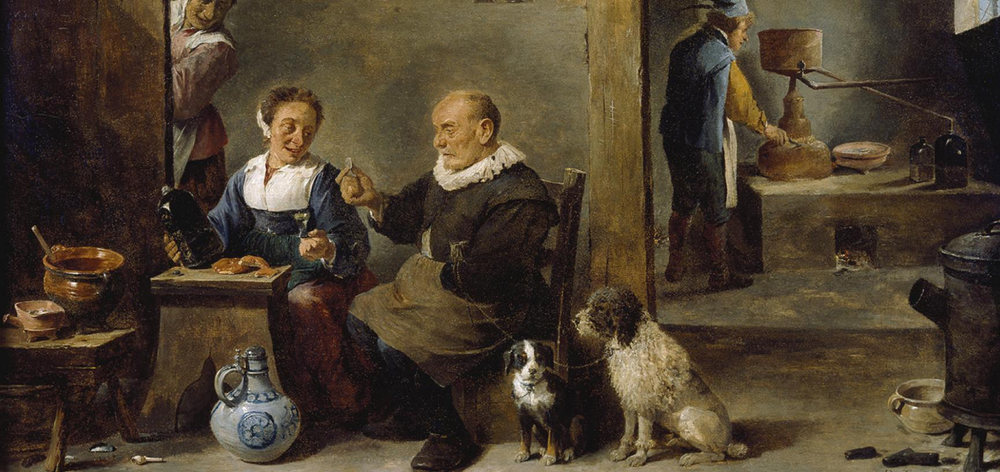
In any case, if you go to Amsterdam, you will probably see a few exhibitions of Dutch Renaissance painters. Many of those paintings portray women, often in domestic scenes, which means they are frequently depicted in kitchens. And those Dutch kitchens were certainly not small. Nor do you see people heating things on the floor; on the contrary, for the period they actually look rather well equipped.
Even during the period when the famous “window tax” turned houses into long, narrow buildings with minimal façades, kitchens were not as small as modern ones. So I started wondering why modern kitchens ended up being so tiny, after centuries in which they had been—by modern standards—quite spacious places.
So, who made kitchen be a little cage?
Le Corbusier.
At first I thought he might qualify as a kind of liberator: someone advocating minimal kitchens because he believed women should no longer be confined to them. In that case I would have accused him of a certain progressive illusion. But reading more about it, I discovered that this was not the case at all.
Le Corbusier believed that women should spend less time in the kitchen—but not in order to free themselves from it. Quite the opposite. By making kitchens small and efficient, he thought women—who, in his view, would remain responsible for the kitchen simply because they were women—could also work.
And that is why kitchens today are so tiny.
(Except in the United States, where apparently they did not listen to the French. Except in New York.)
But when I started reading about Le Corbusier, I had the same feeling I had years ago while writing the Edelweiss trilogy when I stumbled across the Lebensreform movement.
Before that, I didn’t know much about it. I only knew that here in Germany there are these places called Reformhaus, full of nature-worshipping products and people who look vaguely New Age: lots of talk about body and spirit, harmony, balance, and so on.
The strange feeling in both cases is that you suddenly realize you are looking at one of those ideas that somehow manage to look both right‑wing and left‑wing at the same time.
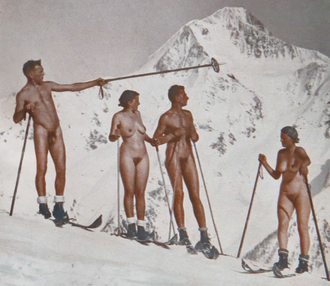
Take Lebensreform. If you look at the practices themselves—naturism even in the snow, sun salutations in the morning, the cult of the healthy body both physically and spiritually—it all looks very much like a group of cheerful proto‑hippies. Very organic, very holistic, very New Age before New Age was even a thing.
The problem starts when you discover that the SS rather liked it.
Quietly, of course. They didn’t advertise it much. But their version of naturism was framed as a demonstration of the Aryan body triumphing over nature. In other words, you proved you were a real man—what today we would probably call an alpha male—if you could ski naked in the snow.
And then there was the morning ritual: the sun greeting. You would wake up after sleeping in a small wooden hut somewhere in the mountains, step outside, and greet the rising sun with a kind of ceremonial stretch - very yoga.
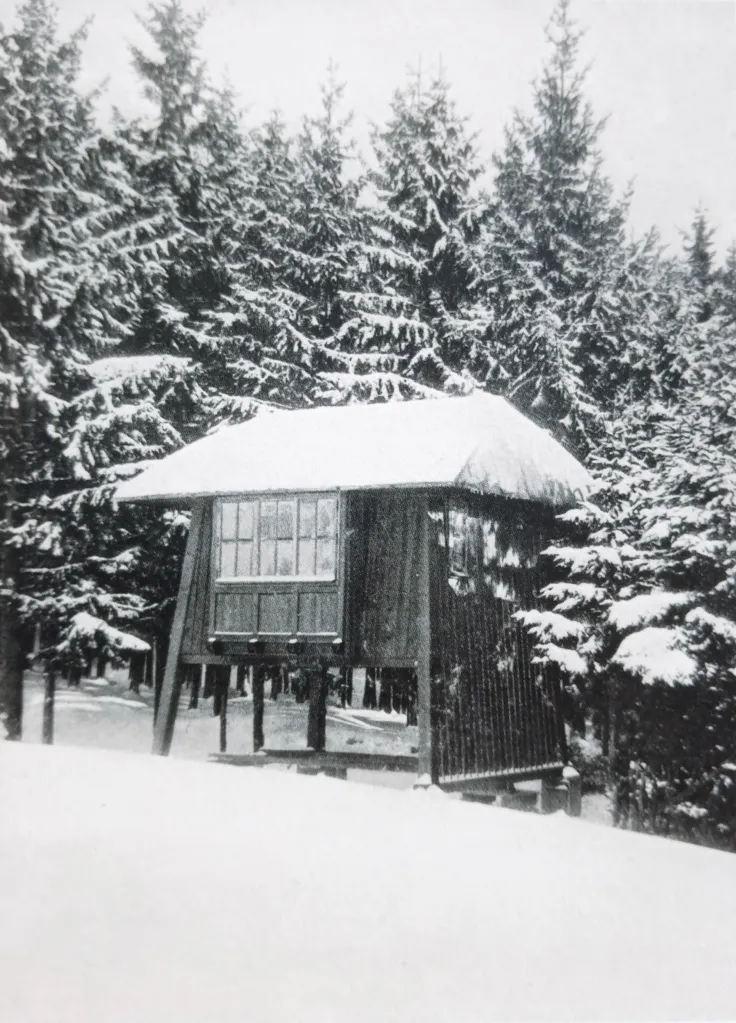
This, unsurprisingly, appealed to a political movement - the nazi - that had a near‑mystical fascination with the forest, and whose symbolism was, well… rather solar.
Add a few more ingredients—celebrating the strong body against nature, life in the forest, and a rather enthusiastic encouragement to produce many children (after all, feminine energies had to flow freely)—and the result was a movement that the regime did not exactly promote, but certainly did not rush to suppress either. At least not unless things became too eccentric even for them.
I had the same impression when reading about Le Corbusier.
If anyone else had stood up and declared that women belong in the kitchen, they would have been immediately accused of promoting backward, quasi‑slavery ideas. But Le Corbusier managed to frame the same concept in a strangely progressive way—much like it once became possible for people who would today look suspiciously like hippies to end up adjacent to Nazis.
Le Corbusier’s position, more or less, was that women should indeed remain in the kitchen—because they were women, you know. Happy wife, happy life, and all the things that today we would probably file under tradwife aesthetics.
But here comes the smartass part.
He argued that they should stay there for as little day-time as possible. How nice of him, isn't it?
Their emancipation, in his view, was a matter of efficiency. If the kitchen were redesigned as a small, perfectly optimized workspace—fewer steps, less movement, less fatigue—then the woman could remain the traditional angel of the household and at the same time become a fully emancipated modern professional.
And… voilà.
One foot. Two shoes.
In this way, if you try to argue that Le Corbusier was a bit of a dinosaur, someone will immediately object: no, he was extremely modern—he wanted to emancipate women.
But the word emancipate, in his view, meant something rather specific. It meant making women more efficient in the kitchen, to the point that they would still have enough time left to be workers as well.
The kitchen would remain their domain. It would simply become optimized.
Same shit, better taste.
And this is exactly the same strange ambiguity you encounter with the Lebensreform movement. If you suggest that some of its aesthetics had a distinctly Nazi flavor, people will quickly remind you that it also gave birth to things like FKK culture, Steiner‑inspired alternative medicine, vegetarian communes, and the whole “return to nature” ethos that many people today associate with the counterculture and the cultural liberation of the 1960s.
All of which is true.
But it is also true that parts of the movement fit surprisingly well with some elements of Nazi ideology. Many of the typical Lebensreform practices—mass hiking, the cult of the healthy body, sun and fresh air, communal life in nature, “natural” diets—ended up flowing into the big Nazi leisure organization, the NS-Gemeinschaft “Kraft durch Freude” (KdF), founded in 1933 to organize holidays, excursions, sports, and outdoor activities under ideological supervision.
Another example of Lebensreform-style ideas being integrated into official structures was the support given to certain forms of “natural” agriculture, such as biodynamic farming, which managed to gain cooperation and backing from various Nazi institutions for both ideological reasons (blood and soil, regenerating the national body) and practical ones - lack of soil fertilizers due the war ongoing.
Because of this overlap, many Lebensreform practices were not aggressively suppressed. Some groups were absorbed into state‑approved organizations, others continued quietly as long as they avoided political trouble, and several of their ideas—especially body culture and outdoor physical training—were simply repackaged within the official ideology.
Which is what makes the whole thing so peculiar: the same set of ideas could look like proto‑hippie counterculture from one angle and comfortably coexist with authoritarian ideology from another.
Exactly the same trick that allowed Le Corbusier, with admirable rhetorical agility, to keep a single foot in two very different shoes.
On the one hand, his vision of domestic life is thoroughly traditional: the woman belongs at the centre of the home, and especially in the kitchen, which he openly describes as the place where her smile guarantees peace in the household. In that sense, the division of roles is clear: the man is out in the productive world, the woman runs the domestic universe. On the other hand, he wraps this in a very modern, almost progressive language: the kitchen should be rational, compact, efficient, almost a little laboratory, so that domestic work takes less time and less energy. The woman still runs the kitchen, but now it is a well‑designed machine for cooking, freeing up a few hours so she can also, in theory, have a job or a public role. The structure stays conservative, the rhetoric sounds emancipatory, and everyone gets to feel modern without moving the furniture of gender roles too much.
And thanks to him, and to the whole brutalist obsession with ultra‑rational, ultra‑compact living, families today often find themselves with workspaces that are barely big enough for one person to turn around in. You can preach all you want that men should help women in the kitchen, but Le Corbusier and his contemporaries were busy designing kitchens that function like a cockpit: optimised for a single operator, with every movement calculated. That very modern feeling many of us have—of being “in the way” or “interrupting the choreography” when we try to help—is not just in our heads; it is literally built into the architecture. For Le Corbusier, the kitchen was the domain of the woman, and only the woman; at best, he might have tolerated a lone man in there, but genuine cooperation between two adults was clearly not part of the floor plan.
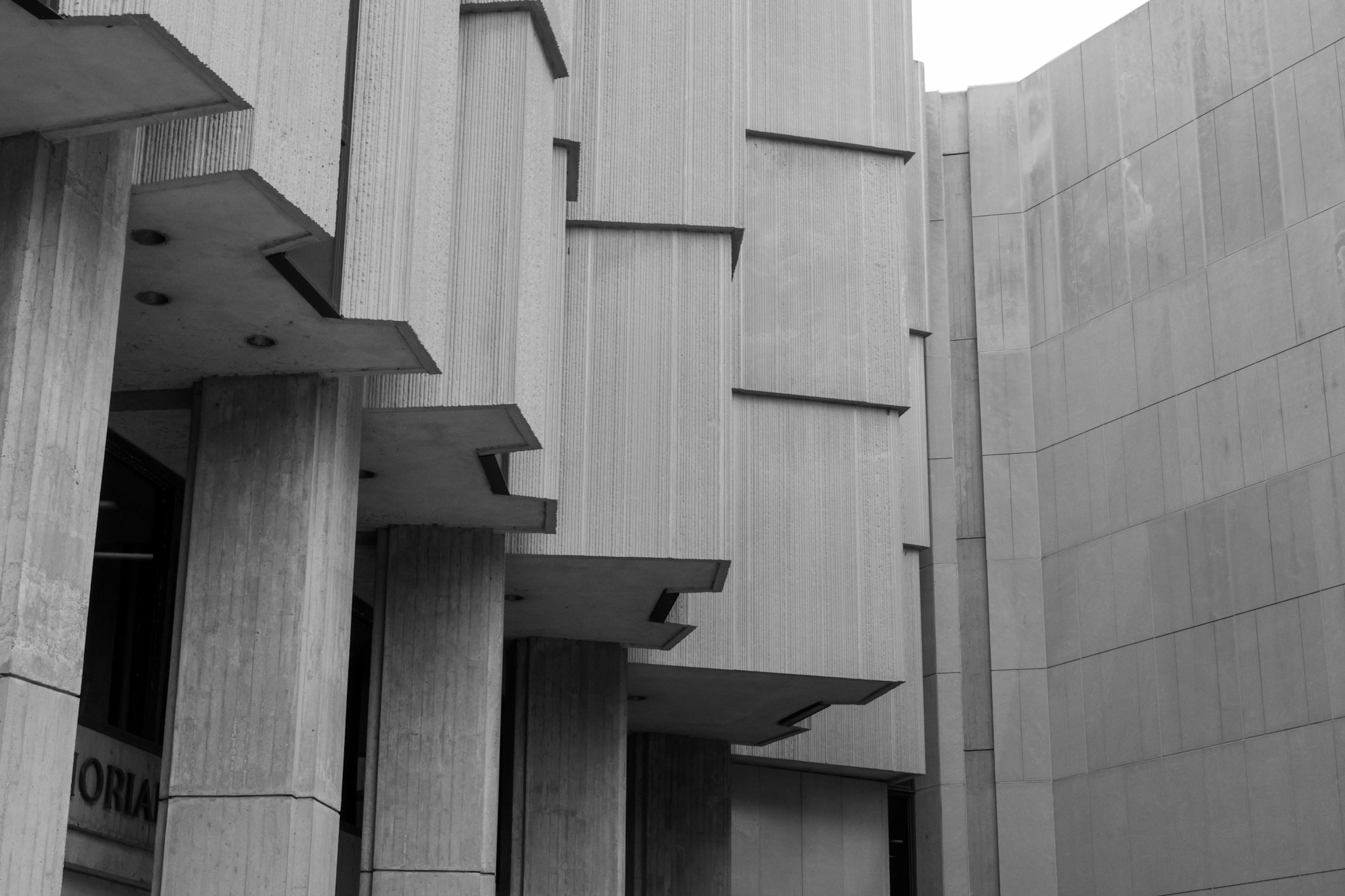
I don’t even want to start a full discussion of brutalism, because I would immediately sound extremely Italian. I find it aesthetically horrible: it looks like the love child of Stalin’s court architect and a shady Roman real‑estate developer from the 1950s. But it is also conceptually awful, because it sacrifices comfort. Yes, traditional kitchens were large, and you had to walk around in them, but they were also comfortable: there was usually at least a corner where the poor woman could sit down for a moment and rest.
The decision to abandon the excellent Roman‑style concrete made with raw lime and chalk, and to replace it with that bizarre marriage of cement and steel we call reinforced concrete, is another stroke of "genius". We know how that ends: Roman concrete structures, thanks to their chemistry, are still standing after two thousand years, while reinforced concrete starts losing elasticity after a few decades and struggles to get much past a century without serious problems. In earthquake zones like Italy, you can sometimes watch Roman‑era structures, or buildings inspired by that tradition, survive tremors that cause modern reinforced‑concrete blocks to crumble like stale bread.
But that is not the main point of this article.
What really interests me is how certain people and movements manage to be perfectly suited to every season. They are able to smuggle in messages that are structurally right‑wing, while adding just enough left‑wing sauce on top to make them look enlightened and progressive. History, which is often lazy, can then be easily fooled into giving them a free pass.
And sometimes, as a bonus, they also leave us with horrible buildings.