Nukes?
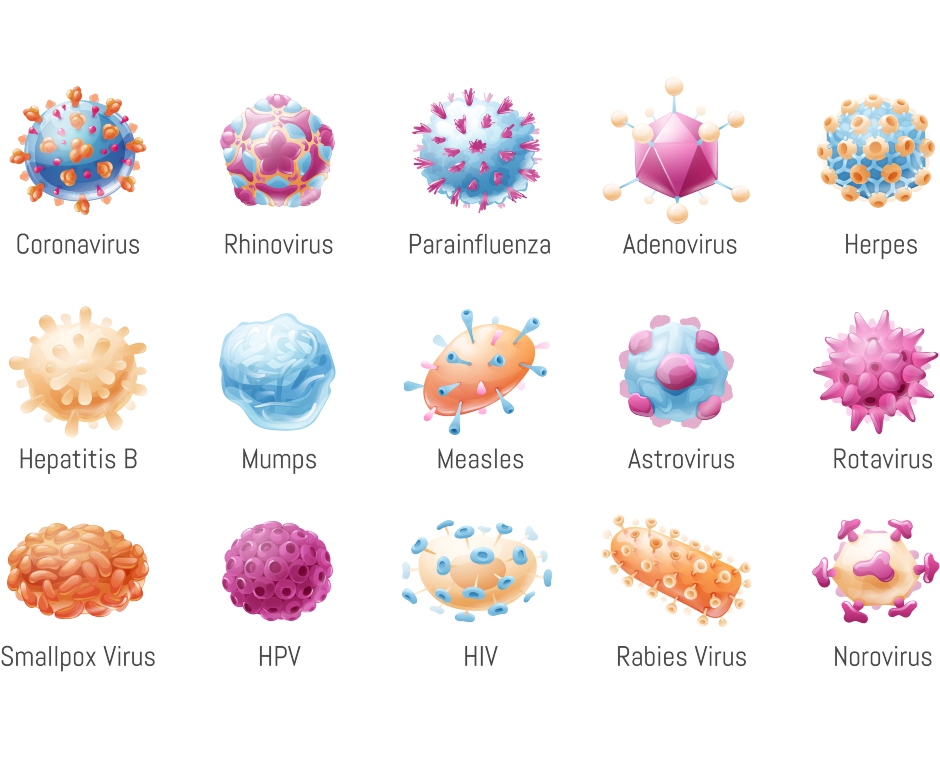
Contrary to what you might think, this post does not intend to discuss whether there are nuclear weapons in Iran, or whether Iran is in the process of building them. On the contrary, I would simply like to talk about how, if the enemy is the United States—or great powers in general—building nuclear weapons is, quite simply, the most foolish choice possible. It means choosing to fight superpowers on the very terrain where they are strongest.
Let us take the Coronavirus pandemic as an example. What did we see of the United States? How strong were they?
Let us be honest: a pathetic performance. Not only did they fail to implement a real lockdown—something that even Italy managed to achieve, and Italy is not usually held up as a model of civic discipline—they did not even come close. They were not even able to disseminate a minimal alert or credible information, overwhelmed as they were by a flood of fake news and conspiracy theories claiming that hospitals were pretending to be full, that the people in the beds were actors, and so on.
In Europe, such behaviour was generally confined to small minorities—often inspired by the United States—but the broader population followed government directives, and governments were able to inform their citizens relatively well.
This was due to the fact that the United States harbours, first and foremost, a deep antipathy toward science and expertise in general—and here the MAGA movement stands at the centre of it all—but also because there is no real state welfare system, making prevention effectively impossible—insurance companies do not engage in it—and, worse still, making it difficult to exercise even minimal control over the public health situation.
And this is precisely the point that must be recognised: if the war is conventional or nuclear, the United States is a superpower. If the war is biological or bacteriological, the United States is completely unarmed and defenceless: a huge sitting duck.
Aaaannnddd... Russia?
If anything, the case of the Sputnik vaccine further deepens the sense of inadequacy surrounding Russia’s pandemic response. What had been presented as a scientific breakthrough—complete with the symbolic weight of its name—gradually revealed itself, in subsequent evaluations, to be far less effective than initially claimed.
This is not merely a technical failure, but a systemic one. A vaccine is not just a product: it is the result of a process that requires transparency, rigorous validation, and trust. When that process is short-circuited—when approval precedes verification, and announcement replaces evidence—the outcome is almost inevitably flawed.
In the case of Sputnik, the problem was not only the uncertainty surrounding its efficacy, but the opacity of the data supporting it. Independent scrutiny was limited, communication inconsistent, and confidence—both domestic and international—fragile from the outset. Later analyses and real-world outcomes did little to dispel these doubts; if anything, they reinforced the perception that the initial claims had been, at best, overstated.
The consequence is not just a less effective vaccine, but a loss of credibility that extends far beyond a single product. In public health, trust is cumulative and fragile: once eroded, it cannot be easily restored.
And this brings us back to the broader point. In a biological or epidemiological crisis, strength is not measured in missiles or megatons, but in institutions capable of producing reliable knowledge and acting upon it. Where those institutions fail—or are subordinated to political narratives—the result is not merely weakness, but exposure.
If one wished to find a case even more dismal than that of the United States, one would not have to look far. Russia’s handling of the pandemic offers precisely such an example: a performance not only ineffective, but deeply compromised by propaganda, opacity, and a structural inability to confront reality.
From the outset, the Kremlin framed the crisis less as a public health emergency and more as a narrative to be controlled. Numbers were massaged, responsibility was fragmented across regions, and the central state oscillated between denial and improvised measures. The result was neither control nor clarity, but a fog of statistics in which even basic facts became uncertain.
At the centre of this effort stood the vaccine triumphantly announced to the world as “Sputnik V”—a name chosen with deliberate historical resonance, evoking the technological bravado of the Soviet era. The implication was clear: Russia was once again first, once again ahead of the West.
But the reality was far less impressive. The vaccine was approved before the completion of large-scale clinical trials, in a move that prioritised political messaging over scientific validation. Trust, both domestically and internationally, was therefore compromised from the very beginning. Even within Russia, uptake remained hesitant, not only because of logistical shortcomings, but because the population itself appeared unconvinced by the state’s assurances.
Production bottlenecks, distribution failures, and inconsistent data further eroded credibility. While other countries struggled but eventually managed to organise mass vaccination campaigns, Russia seemed unable to translate its early announcement into a coherent public health strategy. The gap between proclamation and execution became impossible to ignore.
In the end, what was presented as a symbol of scientific prowess revealed itself as something else entirely: a demonstration of how fragile a system becomes when image takes precedence over substance. If the American case showed confusion and fragmentation, the Russian case added another layer—one of deliberate illusion, sustained until it could no longer be maintained.
The United States is not the only country in the world to be a sitting duck. Russia, too, is not in a very different condition. In the event of a bacteriological war, it would have no real chance of emerging victorious against countries that possess a genuine public healthcare system.
And... China?
I am sorry to say this, but the countries that behaved best during the pandemic were the European ones; and although their performance was far from perfect, it must be remembered that public healthcare systems are emerging from a long history of cuts.
A small country, such as Iran—but endowed with a reasonably well-organised public healthcare system—or indeed a European country, if it truly feared the great powers, would hardly choose to equip itself with a nuclear bomb. Why compete in the very arena where superpowers are overwhelmingly strong, when one can play the game in which they are at their weakest?
- A public healthcare system capable of distributing vaccines and monitoring the situation.
- A set of biological weapons, developed alongside their corresponding vaccines.
These, taken together, could allow a small state to prevail against the so-called “superpowers.” For if the game is bacteriological warfare, they are—far from accidentally—completely defenceless.
If I were at the head of a regime such as the Iranian one, I would not waste time on nuclear ambitions. The experience of the pandemic has shown how the “superpowers” perform in the event of a bacteriological war, and the spectacle has not been an inspiring one.
And it must be said that we are speaking only of viruses that affect human beings. We have not even mentioned those that target livestock, or those that devastate crops.
You might think, “yes, but then they would simply nuke you.” But even that is not true. If you are struck by an unknown virus, for which you do not have a vaccine, the thing you want most is a vaccine. And no—you do not want to hit, with a nuclear strike, the facilities where the enemy keeps its vaccines—because they produced them alongside the virus—nor do you wish to risk killing the very people who know how to manufacture the vaccines you so desperately need.
No, they would not nuke you.
Especially if the virus has effects sufficiently horrifying to spread panic. For instance, a variation of syphilis that spreads through contact. It would render supermarkets impracticable, where it is easy to touch items already handled by others. It would make public transport unusable—metros, buses. And money itself: the most handled object in America.
The visible effects of syphilis are so terrifying that the population would descend into panic. And if, at that point, the enemy tells you, “if you attack me, I will destroy the remaining vaccine reserves instead of giving them to you—if you surrender,” there is little you can do: the population is in a state of panic.

One of the most perverse aspects of bacteriological warfare, moreover, is that research centres pass themselves off as medical or pharmaceutical facilities. While it is possible to determine that a nation is developing nuclear weapons by examining the movement of specialised equipment—such as centrifuges, high-performance electronic components, and the like—detecting that a country is engineering viral mutations for military purposes is far more complex. The infrastructure appears indistinguishable from that of pharmaceutical companies, and may in fact be located within those very companies, or even within hospitals. The same applies to vaccine stockpiles.
And this is still nothing if we consider the serology of certain bacteria. Remaining with the example of syphilis—a bacterium that can be mutated using CRISPR—the serological picture is as follows:

If syphilis were to cease being sexually transmitted, it would become an epidemiologist’s nightmare. Something that would make Ebola look like a trivial inconvenience.
This is the reason why I am highly sceptical of all the effort and all the fear directed at “small countries with the bomb”: in reality, the superpowers should be worried about small countries with the virus.
Or perhaps, quite simply, they should focus on building a decent healthcare system.