Can Catholicism Replace Socialism?
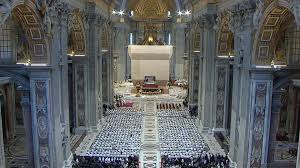
The clash between the Pope and Donald Trump has brought about, on the part of the left, a wave of sympathy for the Pope, who is seen by some as the only “global political party” capable of mounting a real opposition to Trump, rather than merely commenting on his moves.
And in particular, many are beginning to realise that the Church possesses a social doctrine — that is, a coherent framework already in place — and therefore has its doctrinal foundations firmly secured, along with a defined ideology: precisely what the orphans of the left’s hollowness are desperately asking for, after years spent replacing thought with slogans.
First of all, let us clarify what we are talking about, so that we may approach the question without resorting to words as empty labels.
What is socialism?
Socialism is a philosophical theory formulated by Karl Marx. And “theory” here is not a polite way of saying “opinion”: it means that it starts from certain foundations — necessary, even if not always sufficient — and from there builds the rest of its theses through structured reasoning, not by the mere accumulation of slogans.
What are these foundations, that is, the pillars without which socialism cannot stand?
- Class struggle. This means that it is the duty of the lower, or proletarian, classes to become aware of their own condition and to struggle against the upper classes, which oppress them, until a revolution is achieved. And yes, in its classical formulation this also implies the use of violence as a means of rupture.
- The collective, or social, ownership of the means of production. These cease to be private property and, above all, cease to be exchangeable in the form of capital, as happens, for instance, with shareholding. In other words, they can no longer be objects of individual accumulation.
- Materialism. A way of interpreting historical and social phenomena that rejects metaphysical or abstract constructs — God, the Good, transcendent essences — and instead focuses on material conditions, which in practice almost always translate into economic relations.
- A Jacobin idea of equality, according to which no individual should stand at the head to the point of making decisions alone, and all decisions must be collective, at least in theory. And everyone possesses the same rights, both in fact and in potential.
Without these pillars, you cannot have socialism. You may, of course, have love for the poor and the desire to help them, as religions often do. You may have the idea of a State that protects and provides, as in other political doctrines, such as fascism. But you cannot call it socialism if you do not accept those conditions.
Consequently, those who claim that Christ was “socialist” are mistaken, because he never articulated nor accepted those points. The same applies to those who argue that fascism was a form of socialism: these are labels used improperly, not categories that withstand even minimal scrutiny.
That said, can Christianity replace socialism, given that they are not the same thing? We have just seen that they are radically different concepts, built on incompatible foundations. But this, in itself, does not prevent one from taking the place of the other: meat and fish are different, yet if one is missing, the other ends up on the table.
The point is to understand what exactly is being replaced. If we are talking about a structured political theory, with its pillars, its aims, and its instruments, then Christianity is not a substitute. Not because it is “inferior” or “superior,” but because it plays an entirely different game: it was not conceived to organise relations of production or to lead a social revolution, but to answer moral and, above all, transcendent questions.
If, on the other hand, what is missing is an ideology — that is, a coherent system that gives meaning to the world, defines what is good and what is evil, and tells people where they stand — then the picture changes. Christianity undoubtedly provides this: an organic vision, an ethical framework, a powerful narrative. And above all, it does not shift every three months in pursuit of public mood.
The problem is that, in attempting such a substitution, one risks conflating different levels. Socialism claims to explain how society works and how to change it. Christianity tells you how you ought to behave within any society. These are layers that can overlap, but they do not coincide.
So yes, in the absence of a functioning secular ideology, some may turn to Christianity as a surrogate. But it is not a one-to-one replacement: it is closer to using a compass instead of a map. It gives you a direction, but it does not tell you where the roads are.
Can this substitution last? The answer is: it is unlikely.
To begin with, Catholicism has the “structural flaw” of incorporating within itself the Jewish religion — that is, the Torah, or what Christians call the Old Testament. Historically, this move also served a syncretic purpose: to absorb and rework elements of a competing tradition rather than confront it head-on. But it has had a non-trivial side effect: it brings with it a body of texts which, in both language and content, belong to a far harsher age.
Indeed, the Old Testament — which largely overlaps with the Torah — is full of episodes that today strike us as brutal, norm-driven to the point of obsession, and often violent. In certain contexts, this can become an ideological reservoir useful for justifying authoritarian practices: if you want to legitimise repression, exemplary punishment, or a hierarchical vision of society, there is no shortage of material there. It is no coincidence that figures such as Joseph Stalin, operating in an entirely different context, came to embody methods that resonate more with that kind of narrative than with contemporary soft moralism.
And here the problem emerges. This legacy sits very uneasily with the sensibilities of modern European socialists, who — for all their contradictions — operate within a completely different ethical horizon, one far more attentive to individual rights, formal equality, and the rejection of overt violence as a political tool.
Nor is that all. Paradoxically, the very Old Testament that should make Christianity “more robust” at the ideological level ends up, in some contemporary readings, drawing it closer to worlds on the opposite side of the political spectrum. A segment of Donald Trump’s supporters, for instance, appeals to highly literal forms of biblical religiosity — often within the context of Messianic Judaism — which have little to do with European Catholicism, yet share precisely that more rigid, Old Testament framework.
The result is an internal tension that is difficult to resolve: on the one hand, a doctrine that demands coherence and historical continuity; on the other, an audience that would like to use it as a “soft” substitute for a political ideology. And it is a tension that, over time, is unlikely to hold.
Certainly, if Catholic Christianity had not made the choice — let us call it that — to incorporate the Old Testament, but had instead left it as a mere “contextual reading” useful for understanding why Christ sought to reform Mosaic law, the sense of rupture would have been far clearer and more legible.
In that case, Christianity could have presented itself as a clean break with the past, without dragging along doctrinal ambiguities or internal tensions between a merciful God and a punitive one. And, above all, it would have allowed those seeking a harsher, more vengeful and rule-bound vision of religion to look elsewhere for their reference point, rather than having these two impulses coexist under the same roof.
But here we enter the realm of counterfactual history — always an interesting exercise, but rarely a harmless one. Because that choice — the inclusion of the Old Testament — was neither an accident nor a whim. It was a deliberate move, one that allowed the Church to root itself in an older tradition, to claim historical continuity and, above all, to legitimise itself as a fulfilment rather than a mere alternative.
Without that continuity, Christianity might have risked appearing as just another sect, a deviation rather than an evolution. With it, instead, it could claim: we are not abolishing the law, we are bringing it to completion.
The price, however, is what we see today: a permanent tension between two different moral and symbolic registers, which each era attempts to reconcile in its own way. And yes, it is plausible to think that, without this original ambiguity, European history itself might have taken a different course.
The second essential problem is that the Gospels are, historically, texts written decades after the death of Jesus Christ. They are not stenographic records, but narratives constructed after the fact, in different contexts and with specific purposes. And this inevitably introduces a gap between events and the account of those events.
Several elements point in this direction. Crucifixion, for instance, in the Roman Empire was a punishment typically reserved for those considered dangerous to public order: rebels, subversives, people who challenged the authority of the state — the followers of Spartacus, for example. And yet Christ, in the Gospels, is never portrayed as someone organising armed revolts or openly inciting political rebellion.
Here the tension arises. If he was not a subversive in the Roman sense of the term, why such a punishment? One possible answer is that he was perceived as a religious agitator with potential political implications — something that, in an unstable province, might have been enough. But the way the story is told remains only loosely aligned with Roman legal categories. The same applies to Barabbas, who in the accounts appears closer to the profile of a rebel, yet is released according to a dynamic for which there is no clear counterpart in Roman practice.
There is also another, not insignificant detail: the “trial” in which the crowd influences the final decision is not a typical feature of Roman law. A governor did enjoy wide discretion, but there is no documented practice of a ritualised choice between two condemned men under popular pressure. This is an element that answers more to narrative and theological needs than to legal ones.
Questionable elements also emerge in the arrest scene. The Gospels speak of temple guards and a cohort — that is, an armed group, probably involving both local and Roman participation. This is plausible in the context of Jerusalem. Less plausible is the construction of the sequence: a night-time intervention, formal passages between different authorities, and then a structured trial, all within a very tight timeframe.
The management of public order in the Roman Empire was pragmatic, often brutal, and not inclined toward formalities when it came to preventing unrest. The idea of such a linear chain — arrest, transfer, public decision — seems more designed to give narrative coherence than to faithfully describe an actual procedure.
The point, once again, is not to claim that “nothing happened,” but to recognise that the account we have is filtered, adapted, and in part reconstructed by authors writing with different aims. And this begins to matter when one tries to use these texts as the basis for a rigorous political or historical argument.
There are also scenes that, read with a minimum of practical sense, raise doubts. Take the references to Roman military figures such as centurions, who appear at various points in the Gospels. A centurion was not an isolated individual, but an officer embedded in a rigid military structure, with men under his command. He was not a figure who moved “on his own” in informal contexts.
And indeed, in the arrest scene, the wounded man is not a Roman, but a servant of the high priest, Malchus. This makes the episode less implausible, yet the overall dynamic still appears constructed with a certain degree of freedom relative to the actual operating procedures of an armed unit in Rome.
The issue is not any single “odd” detail. It is the overall pattern. These are small inconsistencies which, taken together, give the impression of an indirect knowledge of how the Roman state functioned: not total ignorance, but not first-hand familiarity either.
This does not mean that the authors “knew nothing,” but that they were not writing military reports or legal manuals. They were constructing a narrative with a theological purpose.
And this, once again, brings us back to the starting point: if we read them as religious texts, they work. If we use them as the basis for historical or political analysis without taking this distance into account, problems begin to arise.
Why is all of the above a problem? Because the people who today identify as “left-wing” or “socialist” are accustomed — through a habit now more than two centuries old — to critical thinking. They do not accept a text as valid simply because it is authoritative: they take it apart, compare it, look for cracks. And a text that describes events difficult to reconcile with the functioning of the Roman world would not, in the long run, hold up even at a theoretical level without constant rationalisation.
And on the philosophical level?
Here too, the idea of proposing Christianity as an alternative to the “predatory” Capitalism of Donald Trump’s followers could, in theory, work. There is room for moral opposition, for an alternative narrative, even for a recovery of strong ethical language. But there is a far more concrete problem — and one much harder to sidestep.
The Catholic Church is not only a spiritual institution: it is also a major economic actor. In Rome, for instance, it is estimated to hold a vast share of real estate — precise figures are difficult to establish, but one often hears significant percentages mentioned, such as 20 or even 25 per cent — and at the scale of Italy the picture broadens further, including extensive agricultural holdings, sometimes said to be in the range of 10–15 per cent.
Now, you can certainly construct a moral narrative against predatory capitalism. But if you are, at the same time, one of the largest property owners in a country facing a structural housing crisis, the message begins to creak. Not because it is automatically false, but because it appears — to those accustomed to critical thinking — deeply inconsistent.
And this inconsistency, more than any theological dispute, is what makes it difficult to use Christianity as a credible ideological substitute for a left that, at least in theory, demands coherence between principles.